Live Weather: Forecast & Radar
- 3.8
- Rating
- 100.00K
- Installs
- Free
- Price
 Analysis by App-foxy
I usually judge a weather app by one simple question: can I open it when I am already late, understand what the day looks like, and make a sensible decision without digging through clutter? Live Weather: Forecast & Radar is built around that everyday need. It is a free weather app from Chavazoem Potenutme, aimed at people who want current conditions and forecasts in a straightforward place rather than a complicated meteorological dashboard.
After using it, my impression is positive but measured. The app is easy to approach, and its live-forecast focus makes sense for planning commutes, errands, school runs, walks, and outdoor appointments. It is not the kind of tool I would choose solely for specialist weather analysis, but it can become a useful daily check once the opening screen is set up for the place I care about most.
Its public reception is encouraging: it holds a 4.6 average rating from around eighty-eight ratings, with more than fifty thousand installs. Those figures suggest a modest but real user base rather than a long-established weather giant. I see that as a reason to approach it with realistic expectations: the attraction is convenience, not a huge ecosystem of advanced services.
You May Also Like

 Blood Strike: 2.5 Anniversary
Blood Strike’s Loadouts Turn Every Drop Into a Tactical Gamble
A close look at Blood Strike’s custom loadouts: how fast access to signature weapons reshapes its battle royale rhythm, rewards preparation, and narrows the gap between fights.

 Pandora - Music & Podcasts
Pandora’s Music Is Easy to Start, but Harder to Recover
Pandora’s strength is its low-effort path from a seed to a station. Its weak spot is how much confidence it asks you to place in connection, setup, and quiet recovery.

 8 Ball Pool
 Is Built on Rivalries, Rematches, and Routine
A close look at the rivalries, rematches, shared routines, and unanswered safety questions that turn a quick pool match into a persistent mobile community.

 Samsung Music
’s Quiet Strength Is Playing What You Already Own
Its reach comes less from spectacle than from dependable access to a personal library. That simplicity is both the app’s strongest retention engine and its ceiling.

 AccuWeather: Weather Radar
AccuWeather Review: A Quick, Clear Forecast for Everyday Decisions
For everyday plans, the best forecast is the one you can understand quickly. AccuWeather makes rain timing, radar, and local conditions easy to act on, with a few trade-offs.

 Hill Climb Racing
Why Hill Climb Racing Still Turns Crashes Into One More Run
A tiny car, a bumpy hill and one more upgrade: Hill Climb Racing keeps resurfacing because its simple chaos makes every near-miss feel personal.
More From Our News Desk
View All News


What the first opening feels like
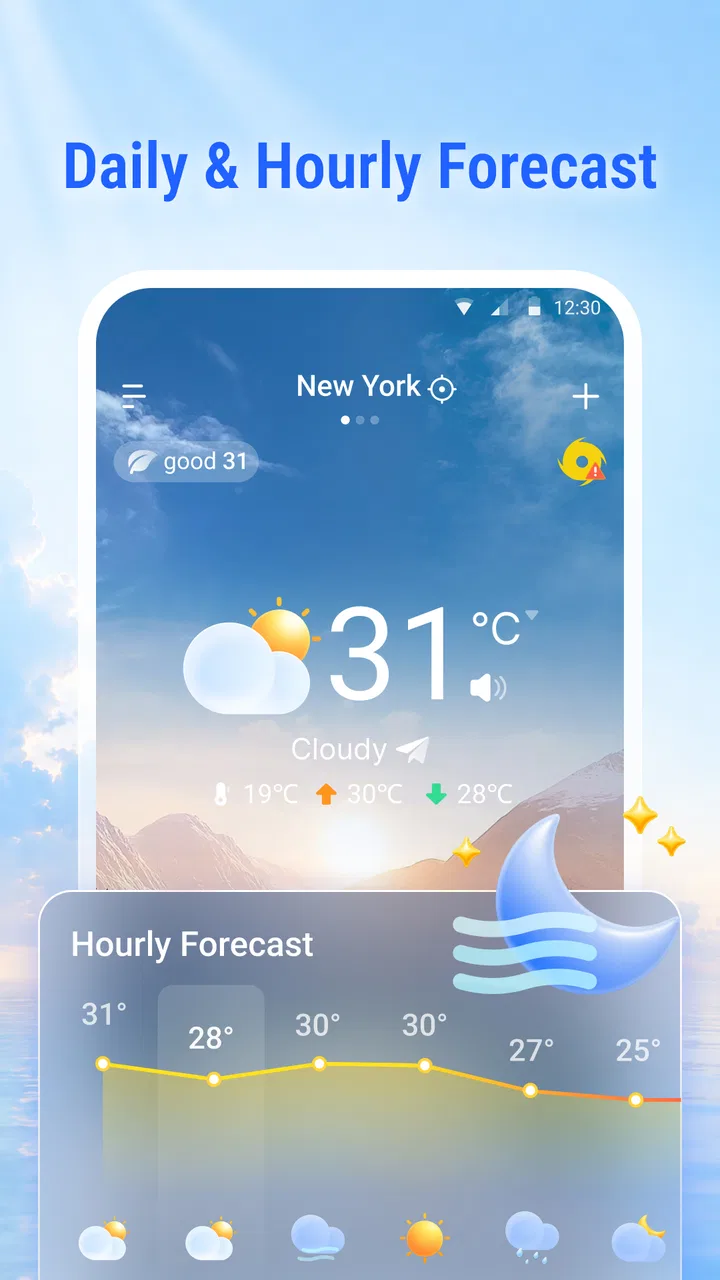
The first thing I want from this type of app is orientation. I need to know where the temperature, present conditions, and upcoming forecast are shown, and I want the screen to make clear whether I am looking at now or later. Live Weather: Forecast & Radar presents itself as a planning tool, so I would begin by treating the main view as a quick decision screen rather than trying to explore every element at once.
For a first-time user, the best approach is to choose one main location and learn the rhythm of the display. Check the current conditions first, then move forward through the forecast. That simple order prevents a common mistake with weather apps: noticing one appealing number or symbol and ignoring the change expected later in the day.
The app is suitable for Everyone, which matches its uncomplicated purpose. I would feel comfortable recommending it to a family member who does not want technical language or an overloaded interface. The current version is 1.2.0.0, and the app supports devices running Android 9 or newer. That operating-system requirement is worth checking before installation, especially if you are using an older phone.
One practical expectation matters here: a weather app is only useful when the selected place is correct. A forecast for a nearby town may look similar, but local showers, wind, or temperature changes can make a difference. I would not rush past the location step. Confirm the place shown on screen before relying on it for a trip or outdoor plan.
Setting it up without overthinking it
Installation is free, so there is no purchase decision blocking the first test. Once it is installed, I recommend opening it at a calm moment rather than when you are already heading out. Give yourself a minute to identify the current-weather area and the forecast area. That small investment makes later checks much faster.
If the app asks you to choose a location, use the place where you spend most of your day, not necessarily the place where you sleep. For someone who commutes, the work area may be more useful during the day; for a parent planning school pickup, the school neighborhood may matter more at the relevant time. If you can select locations within the app, keep the list focused. Too many places turn a quick glance into another task.
I also suggest checking the forecast at two different times on the first day: once in the morning and again before an afternoon commitment. This is not about trying to prove the app right or wrong. It teaches you how the information is presented and whether the app fits your personal routine. A weather tool becomes valuable when it supports a habit you will actually maintain.
There is a useful distinction between setting up the app and trusting it. Setup means choosing the correct place and learning the screen. Trust develops through repeated comparisons with what you experience outside. I would use it for ordinary planning first, then decide whether it is reliable enough for activities where weather has greater consequences.
The first meaningful success
My recommended first task is deliberately ordinary: use the app to decide what to wear and when to leave for a short outing. Open the current conditions, look ahead to the period when you will be outside, and compare that with the time you expect to return. This turns the app from something you are merely browsing into something that helps you make a decision.
Imagine a weekday morning with a walk to a bus stop, a few errands, and a return home later. A quick glance at current weather may tell you how the morning feels, but the forecast helps you avoid assuming that the rest of the day will stay the same. I would use the app to decide whether a light layer is enough, whether an umbrella belongs in my bag, and whether an outdoor errand should happen earlier.
The non-obvious benefit of this workflow is that it prevents “single-moment forecasting.” Many people open a weather app, see the conditions right now, and close it. That is fine for stepping outside immediately, but it is weak planning. With Live Weather: Forecast & Radar, I would deliberately scan the upcoming period before making a commitment. The best result is not memorizing the forecast; it is changing a small decision at the right time.
Another useful habit is to check the app before leaving for an outdoor appointment and then again shortly before the return journey. This matters when your day is split between locations or when the weather is unsettled. It also gives you a better sense of how much information you personally need. Some users will be satisfied with a quick current-condition check, while others will want to examine the forecast whenever plans extend for several hours.
Where it fits among familiar weather options
Compared with checking a search engine for the weather, a dedicated app can be more convenient because it gives you a repeatable place to look. You do not need to reformulate the same question each time. The advantage is strongest when your routine involves frequent short checks: before commuting, before walking the dog, or before deciding whether to hang laundry outside.
Compared with a phone’s built-in weather widget, Live Weather: Forecast & Radar is more useful when you want to open a fuller view rather than rely on a tiny glanceable panel. A widget is excellent for speed, but it can encourage you to see only the current condition. This app is better suited to the moment when you want to look ahead and plan.
Against large, established weather services, the trade-off is different. Those alternatives may appeal to people who want extensive maps, severe-weather tools, detailed historical information, or a broad collection of specialized readings. Live Weather: Forecast & Radar is more appealing if your priority is a focused live forecast experience. I would choose the larger service for serious outdoor planning or professional needs, and this app for ordinary daily decisions.
That does not make it a poor choice for active users. It simply means I would not confuse a convenient forecast companion with a complete replacement for specialist weather information. If a hike, boat trip, event, or work assignment depends heavily on changing conditions, I would compare information rather than rely on one screen alone.
Small points that can cause confusion
The word “live” can create an unrealistic expectation. In everyday use, I interpret it as information intended to reflect current conditions and support an up-to-date forecast check, not as a guarantee that every change outside will appear instantly. Weather changes unevenly, and no app can remove that uncertainty. I would use the current view as guidance, then leave room for conditions to differ locally.
The word “radar” can also lead users to expect a highly detailed storm-tracking workstation. If your main goal is watching precipitation movement in fine detail, examine the available display carefully and decide whether it gives you the depth you need. For a basic user, the important question is simpler: does the view help you decide whether to go now, wait, or change your plan?
Forecast symbols are another source of confusion. A rain symbol should not automatically be read as “it will rain continuously.” I treat it as a prompt to consider timing and prepare sensibly. Likewise, a clear-looking period does not mean every minute will feel identical. The app helps with decisions, but it does not replace judgment about clothing, travel time, or local surroundings.
Location is the most important troubleshooting check. If the forecast seems surprising, I would first confirm the selected place and make sure I am not looking at a different location from the one I intended. I would also compare the current reading with what I can observe outside before assuming the app itself is malfunctioning. This habit is useful with any weather service, but it is especially important when an app is being used for the first time.
Using it as a routine rather than a novelty
The strongest way to get value from this app is to attach it to existing moments. Open it after breakfast, before leaving work, or when an outdoor plan is being discussed. A routine check is more effective than repeatedly opening the app without a question in mind. Ask something specific: “Do I need another layer later?” or “Should I move this errand earlier?”
One of my favorite practical workflows is the two-check method. The first check happens when I make the plan; the second happens shortly before I act. The first helps me choose a sensible time, while the second catches a change that could affect clothing or travel. This avoids both extremes: ignoring the forecast and obsessively refreshing it.
For households, the app can also support a quick shared decision. Before a child leaves for school or before someone starts a long commute, I would check the forecast and explain the conclusion in plain language. The useful outcome is not showing someone a screen full of information. It is turning that information into a practical action, such as carrying a rain jacket or allowing extra time.
There is a trade-off in keeping the experience simple. A focused app may feel less satisfying to users who enjoy exploring layers of weather information. I prefer that simplicity when I am busy, but I would not want it to be my only source for a weather-sensitive decision. The right balance is to use it as the fast first check and seek a more specialized source when the situation demands greater detail.
Who should install it, and who should pass
I think Live Weather: Forecast & Radar is a good fit for someone who wants a free, approachable way to check current conditions and plan the next part of the day. It is particularly suitable for first-time weather-app users, busy commuters, families, and anyone who wants more context than a static glance at the sky provides.
It is also a sensible option for people who dislike crowded interfaces. The app’s central idea is easy to understand: open it, check the live weather, look ahead, and adjust your plan. That clarity matters more than a long feature list when the app is used several times a day for small decisions.
I would suggest skipping it if you need professional-grade forecasting, highly specialized outdoor information, or a deep archive for analysis. I would also look elsewhere if your phone cannot run Android 9 or newer. Users who mainly want a tiny home-screen glance may prefer a built-in widget, while users who want extensive weather layers may be happier with a larger specialist service.
The developer, Chavazoem Potenutme, has kept the product’s identity clear enough for a newcomer to understand. It is not trying to be a general travel planner or an emergency-management system. That narrower purpose is a strength as long as your expectations match it.
My final recommendation after daily-style testing
Live Weather: Forecast & Radar is most successful when you use it to make one concrete decision. It can help you choose the right time for an errand, prepare for a commute, or decide whether an outdoor plan needs adjusting. The free price removes the usual barrier to trying it, and the Everyone rating makes it approachable for a broad audience.
My main caution is not a criticism unique to this app: weather information should be treated as guidance, especially when conditions matter greatly. I would check the location carefully, learn how the forecast is organized, and build a habit of looking ahead rather than focusing only on what is happening at the moment.
For a first-time user, the path to a useful result is reassuringly short. Install it, select the place that matters, identify the current conditions, look forward to the time of your plan, and act on one practical conclusion. If that workflow matches what you want from a weather app, I would recommend giving it a try. If you need specialist detail, keep it as a convenient first stop and pair it with a more advanced weather source when the situation calls for one.
FAQs for Live Weather: Forecast & Radar
01What is Live Weather: Forecast & Radar?
Live Weather: Forecast & Radar is a weather application designed to provide current conditions, hourly updates, extended forecasts, and radar information in one place. After exploring the app, its main purpose is to help users quickly check temperature, precipitation, wind, humidity, and other useful details before traveling, commuting, exercising, or planning outdoor activities.
02Does Live Weather: Forecast & Radar provide accurate weather information?
The app presents weather data in a convenient and easy-to-read format, but forecast accuracy can vary depending on your location, local weather conditions, and the data sources available in your region. Short-term forecasts are generally more useful for immediate planning, while longer-range predictions should be treated as estimates rather than guarantees, especially during rapidly changing weather.
03Does the app include live radar and severe weather alerts?
Live Weather: Forecast & Radar is built around real-time weather monitoring and may include radar maps, precipitation movement, storm information, and weather alerts depending on your location and the version installed. Users should review notification and location permissions carefully, because alert availability can differ by country. For serious emergencies, always follow official local weather authorities.
04Does Live Weather: Forecast & Radar require location access?
Location access is useful if you want the application to automatically display weather conditions for your current area and update forecasts while traveling. You can usually choose whether to allow location access all the time, only while using the app, or not at all, depending on your device. Without location permission, you may need to search for and save cities manually.
05Is Live Weather: Forecast & Radar free to download and use?
The application may be available as a free download, but some features can be limited by advertisements, premium subscriptions, or optional in-app purchases. Before subscribing, check the store listing for the current pricing, trial terms, renewal conditions, and included tools. This is particularly important if advanced radar layers, ad removal, widgets, or extended forecasts require a paid plan.
Pros
- Accurate hourly forecasts help with planning commutes and outdoor activities.
- Interactive radar makes it easy to track approaching rain and storms.
- Weather alerts can provide timely warnings for severe conditions.
- Multiple location support is useful for travel
- family
- or second homes.
- Clean visuals make key weather details easy to understand at a glance.
Cons
- Some advanced radar layers or tools may require a paid subscription.
- Frequent notifications can feel excessive unless carefully customized.
- Forecast accuracy may vary significantly by region and local weather conditions.
- The app may use considerable battery when location updates run in the background.
- Advertising can make the free experience feel less streamlined.

Live Weather: Forecast & Radar
Gallery